Thursday, November 10, 2011

To Timbuktu


To Timbuktu: Nine Countries, Two People, One True Story Casey Scieszka illus. Steven Weinberg

Casey and Steven meet while studying abroad in Morocco. They then return to their colleges on opposite sides of the country. After graduation, they move to Beijing to teach English for 6 months before backpacking through SE Asia and then going to Mali for a year, where Casey has a Fulbright to study the role is Islam in education.

There are a few things that make this book transcend the genre of “here’s a tale of my crazy adventures abroad”. One is Casey’s frank honesty in her writing, especially about the strain certain things put on their relationship. The other is Steven’s illustrations-- there’s a picture on every page and I most appreciated the crazy patterns he puts on the Malian fabric (which Casey assures us are not made up.)

They see many problems with gentrification of Beijing and the destruction of the hutong and with backpacking culture (going to a place to see the ‘unknown’ changes it) and they see both sides of the issue without taking sides. I think these issues are often glossed by travel memoirs or writers aren’t self-aware enough to see that they’re part of the problem (especially when writing about how tourism has spoiled a place that you’re a tourist in.) Casey handles such things really well.

They capture China so perfectly. It made me a bit heartsick, actually. Especially when talking about the street food.

It’s a great book, but I’m not sure it’s a YA book. (I read it because it’s a Cybil’s nominee.) It’s mostly a post-college adventure and I’m not sure on the teen appeal.

Oh, and if you’re wondering, Casey Scieszka does mention her father is a children’s book author. :)

Book Provided by... my local library

Links to Amazon are an affiliate link. You can help support Biblio File by purchasing any item (not just the one linked to!) through these links. Read my full disclosure statement.


Secret Santa!

I love Secret Santa. It's up there with Otis Redding singing "White Christmas", watching Love Actually on repeat, snow angels, gingerbread, and mulled wine for "favorite things about the holiday season."

What if there were a Secret Santa JUST for Book Bloggers. Oh wait! There is! Sign ups end tomorrow, so go DO IT NOW.

Wednesday, November 09, 2011

Bloody Times

Bloody Times: The Funeral of Abraham Lincoln and the Manhunt for Jefferson Davis James L Swanson

In my review of Chasing Lincoln’s Killer, (Swenson's other book for young readers) I pointed out that there was no bibliography or source notes included.

Bloody Times doesn’t have source notes or a bibliography (beyond “Bloody Crimes [the adult book this book is based on]...contains an extensive bibliography for further reading) but it does have a Further Reading list, a who’s who, and a glossary. (The glossary words are also bolded in the main text which is nice, but I found their choice of which words to include a bit... odd.) So, the back matter is better than Chasing Lincoln’s Killer but still incredibly disappointing.

The book itself covers two journeys-- the one that Lincoln’s funeral train took and the one that Jefferson Davis took between the fall of Richmond and his eventual capture. I found the Davis sections much more appealing because most of it was new to me, and, let’s face it, evading capture and trying to not end the war is just going to be more action-packed than a funeral train.

The main text didn’t pack and action and oomph of Chasing Lincoln’s Killer, mainly because the events didn’t lend themselves to the same sort of storytelling. It won’t be as well-liked by readers.

Most disappointing? Swanson thoroughly debunks the story that Jefferson Davis was wearing his wife’s clothing when he was finally captured. I always rather loved that mental image.

Overall, a solid effort, but won’t win over the non-history lovers like his first one did.

Book Provided by... my local library

Links to Amazon are an affiliate link. You can help support Biblio File by purchasing any item (not just the one linked to!) through these links. Read my full disclosure statement.

Tuesday, November 08, 2011

Jane Austen: A Life Revealed


Jane Austen: A Life Revealed Catherine Reef

Jane Austen didn’t leave much behind about her personal life. Very few of her letters survived, and family accounts of her appearance and personality directly contradict each other. One niece said she had “fine naturally curling hair, neither light nor dark” and another said she had “long, long black hair down to her knees.” Reef details what we do know, what’s debated, and what’s speculated about Austen’s life. Throughout, she weaves in the plots of Austen’s novels, often highlighting how they dovetail with events happening in Austen’s life at the time of writing.

Overall, I think Reef does a great job in writing a compelling biography with such scant primary source material. I think the referencing of book plots was a nice touch, but it also gives me pause. I think many readers will already know the plots and find the summaries a bit tedious. Other readers who will discover Jane through this book will find the plot summaries so well detailed, they may lose the inspiration to read the books for themselves.

Book Provided by... my local library

Links to Amazon are an affiliate link. You can help support Biblio File by purchasing any item (not just the one linked to!) through these links. Read my full disclosure statement.

Monday, November 07, 2011

Nonfiction Monday: Many Faces of George Washington


The Many Faces of George Washington: Remaking a Presidential Icon Carla Killough McClafferty

George Washington is forever etched into our minds as an old man with a clenched mouth and a powdered wig-- the same way he appears on the $1 bill. Or maybe a slightly more majestic side view from the quarter.

But George Washington was not always old and everyone who knew him said that no painter ever got his likeness quite right.

So... what did George Washington really look like?

The staff at Mt. Vernon wanted to find out and they wanted to make three statues of Washington-- one at 19, when he was a surveyor, one at 45 when he was a General in the Revolution, and one at 53, when he was being sworn in as the President.

The book is two-fold-- one part is history and explores who Washington was at the time-- how his actions and events shaped the man. The other part is science, technology and art-- how they determined what Washington looked like and then used that knowledge to make the statues. They couldn’t disturb Washington’s remains and just x-ray them to get a good sense of skull shape, so instead they looked at one bust that had been made from a mask taken of Washington’s face. They aged it up and down. They looked at his tailoring orders to learn about his body shape and how his clothes fit.

It’s a fascinating read. I already knew a bit about this due to a local news story (Mt. Vernon’s just a few miles away from my house) but I enjoyed learning more about the process (and now want to make the jaunt over to see the statues in person.) I think kids will be really interested to learn in more concrete terms that history’s figures aren’t perpetually frozen in time in their most iconic portraits or photographs-- they used to be kids, too and when they were, they just didn’t look like short versions of themselves. The process they went through to reconstruct Washington at different time periods is also a bit like a CSI or Bones episode, so that’s always cool.

A very neat book.

Today's Nonfiction Monday roundup is over at Charlotte's Library!

Book Provided by... my local library

Links to Amazon are an affiliate link. You can help support Biblio File by purchasing any item (not just the one linked to!) through these links. Read my full disclosure statement.

Friday, November 04, 2011

Silk & Venom


Silk and Venom: Searching for a Dangerous Spider Katheryn Lasky, photographs by Christopher G. Knight

In this Scientists in the Field-esque book, we meet Greta Binford, an arachnologist who studies the brown recluse spider. We get an overview of spiders in general, Binford’s biography, and then follow her and her students on a trip to the Dominican Republic to look for brown recluse spiders. (Binford specifically studies how the brown recluse ended up in North America and how it’s related to the South American species.)

The book does a good job of balancing science with the process of doing science, which is something I always appreciate. I also like that we discover several different types of spiders, not just the brown recluse. Close up photography shows how different they are visually, but we also get a good information on how they act differently. Superhelpful and cool is the “glossary of spiders” at the back, which is basically a photochart of all the spiders we’ve met with the scientific and common names and on which pages they appear.

But... while it's Scientist in the Field-esque, it's not a Scientist in the Field book and lacks that certain something that make that series so awesome.

Book Provided by... my local library

Links to Amazon are an affiliate link. You can help support Biblio File by purchasing any item (not just the one linked to!) through these links. Read my full disclosure statement.

Thursday, November 03, 2011

Throne of Fire

The Throne of Fire Rick Riordan

Aphosis- the snake of Chaos- is rising. Sadie, Carter, and the other magicians need to find a way to stop him before he destroys the world. Their only chance is finding and wakening Ra. But they can’t all do that, because an army is coming to attack Brooklyn House, and all the other magicians in the House of Life think the Kanes are evil.

Oh, and it’s Sadie’s birthday.

Epic adventure quest filled with mythical gods and monsters? Yes! It is, after all, Riordan.

Very enjoyable and fun. I continue to love the duel narration of this series. My favorite was Bes, the dwarf god, who travels with and protects the Kanes because Bast has to spy on Aphosis.

I’m a huge fan of Riordan’s children’s work (I haven’t reviewed any of the Percy Jackson stuff because I listen to it and I don’t review audio books, but I really like them) for great rip-roaring adventure. Plus, you learn things about mythology and ancient cultures and that’s always awesome.

Book Provided by... my local library

Links to Amazon are an affiliate link. You can help support Biblio File by purchasing any item (not just the one linked to!) through these links. Read my full disclosure statement.

Wednesday, November 02, 2011

Oil Spill


Oil Spill!: Disaster in the Gulf of Mexico Elaine Landau

I am very familiar with Elaine Landau as she’s written several books for the True Books series, which is GOLD for all my 2nd and 3rd graders who have research reports to do. She also writes for a lot of different nonfiction series that make up the “report book” bulk of a public library collection.

Oil Spill takes a different track-- this isn’t a report book. Sure, it could definitely be used for a report, but it has a high pick-up-and-read browsability factor Landau walks the reader through the Deepwater Horizon spill-- from the initial explosion up to today.

For once, I FINALLY understand how that blowout preventer was supposed to work and how it failed. She explains the mechanics of how drilling works and what went wrong in a way that instantly makes sense without over-simplifying the situation.

This is one the far young side of Middle Grade. In 32 concise pages, she walks us through the spill, trying to stop the oil and gas from gushing out, the clean-up, the effects, and the aftermath, plus ways kids can help, index, glossary, and further reading. All the while, she conveys a lot of information in a super-accessible way.

Not to mention the text is full of big, bright diagrams and photographs.

It’s very well-done and a great book.

Book Provided by... my local library

Links to Amazon are an affiliate link. You can help support Biblio File by purchasing any item (not just the one linked to!) through these links. Read my full disclosure statement.

Tuesday, November 01, 2011

Darth Paper Strikes Back


Darth Paper Strikes Back: An Origami Yoda Book Tom Angleberger

Dwight’s been suspended because Origami Yoda is too much of a distraction. It gets worse-- the Principal's recommended that Dwight be sent to CREF-- the Correctional and Remedial Education Facility-- where the really, really bad kids go. Before being hauled off, Origami Yoda tells Tommy to do one more thing-- assemble a case file. So Tommy’s back on the case, this time letting everyone detail the good Origami Yoda’s done and all the bad things that have happened since he left. Once again, Kellan illustrates and Harvey makes comments-- even though Harvey and his origami Darth Vader are responsible for this mess in the first place.

Just as awesome as the first PLUS! A new Star Wars pencil game (very cool) and some serious love for Robot Dreams
.

Here’s a tip girls-- if you have to decide between 2 guys, and one gives you Robot Dreams because “It’s so great. It’s this really beautiful story...” and one guy gives you an Elvis-playing Teddy Bear. GO FOR THE ROBOT DREAMS GUY. Trust me on this one. Go for Robot Dreams.

Lots of excellent Star Wars nerdery, lots of hilarity, and well, if you liked the first, you’ll like this. If you haven’t read the first, what are you waiting for?!

Book Provided by... my local library

Links to Amazon are an affiliate link. You can help support Biblio File by purchasing any item (not just the one linked to!) through these links. Read my full disclosure statement.

Monday, October 31, 2011

Nonfiction Monday: Please Read (if at all possible)

Please Read (if at all possible): The Girl Project Kate Engelbrecht

From the title page:

In 2007 Kate Engelbrecht began sending cameras and questionnaires to teenage girls across the country. She asked them to use the camera to communicate their view of themselves ad the world around them. The questionnaires were based on the famous Proust Questionnaire, aimed at revealing a person’s true personality. Eventually, nearly 5,000 girls between the ages of 13 and 18 took part in the project. Girls from all parts of the country, of different backgrounds, faiths, and races, participated in what became know as The Girl Project. It is an account of teenage girlhood, experienced and communicated as only teenage girls know and understand.

The book is mostly the photographs that were taken, along with a few full questionnaires and some selected answers.

The photographs tend to show similar themes or poses, or direct juxtapositions. Every so often we’ll get someone's questionnaire-- in their handwriting. Then, we’ll get just one question and a few pages of answers from that question-- in each person’s handwriting.

I have a few complaints-- there were a few quotations that were used multiple times, like someone would have their entire questionnaire used and then some answers would also appear on the group answer section. If over 5,000 girls responded, surely they could have chosen someone else’s answer for the group answer section. Also, some questionnaires indicated that answers continued on the back, but the book only used the first page, so we didn’t get all of the answers.

That said, I loved this book. I love that it shows all types of girls and combats the popular culture view of girls as shallow, vapid, and mean. It shows the anger they have at being portrayed in such a way. It shows girls who feel stuck in small, conservative towns and can’t wait to get out. It shows girls who love where they live. It shows girls who love their boyfriends, girls confessing love to their best friend, girls who can’t get boys to notice them, girls who don’t want boys to notice them. It’s an important book and I think it’s one that teens will like, especially as it’s mostly photographs.

It’s a fascinating glimpse into the lives of real girls. Girls who aren’t nearly as messed up as we worry they are. Girls whose answers read exactly like mine would have when I was in high school. If at all possible, you should read this.

Check out today's Nonfiction Monday Roundup over at Jean Little Library.

Book Provided by... my local library

Links to Amazon are an affiliate link. You can help support Biblio File by purchasing any item (not just the one linked to!) through these links. Read my full disclosure statement.

Friday, October 28, 2011

Goliath

Goliath Scott Westerfeld

Dylan/Derwyn, Alek, and the Leviathan are off to Japan when they make a detour to Siberia, to pick up a most unusual cargo, including Dr. Tesla. Tesla claims he has a weapon that is so terrible it’s sure to end the war. The Lady Boffin thinks he’s bonkers, but Alek wants to end this war, especially as it looks like Tesla will give the weapon to the British and use it against the Austrians. The Leviathan then heads to North America where our characters get entangled with actresses, media moguls, reporters, and Mexican rebels.

The main conflict is Tesla and his new weapon. Tesla is more than a little... unhinged and he’s a polarizing figure, especially between Alek and Derwyn. His weapon to end the war is clearly parallel with the nuclear bomb and the tensions at the end of WWII and adds interesting twists to the history.

I loved all the history woven in-- the stuff we now about and remember, and the stuff we may have never learned, and the semi-obscure (like the 1908 Tunguska explosion).

A most fitting end. Just wonderful. I wanted more time in Japan than we got*, but I did like the portrayal of America and William Randolf Hearst. I also liked the history woven in of battling newspapers and Mexican politics at the time. Plus, just the right amount of Derwyn/Alek drama and suspense and some super-exciting scenes on top of the Leviathan during a hurricane.

I loved, loved, loved, loved, loved this trilogy. I might have to buy it. I want to reread all of it in the middle the night.

*I’ll admit it, I was hoping for a Chinese detour, not a Russian one. I did really enjoy the extra history thrown in with the Russo-Japanese War-- a good reminder that conflict is always larger, longer, and deeper than we remember.

Book Provided by... my local library

Links to Amazon are an affiliate link. You can help support Biblio File by purchasing any item (not just the one linked to!) through these links. Read my full disclosure statement.

Wednesday, October 26, 2011

Elizabeth I: The People's Queen

Elizabeth I, the People's Queen: Her Life and Times, 21 Activities Kerrie Logan Hollihan

This is in the same series as Thomas Jefferson for Kids: His Life and Times with 21 Activities, and was also nominated for a Cybil.

The biography portion is overall well done. It does a great job of explaining the domestic and international politics and events that really shaped Elizabeth’s life. It also covers many of the cultural aspects, mainly Shakespeare.

My only complaint is that Hollihan sometimes quotes primary sources, complete with Elizabethan spelling and doesn’t offer any translation, gloss, or explanation. I mean passages like this: ...paraventure your Lordeship and the rest of the Counsel wil thinke that I favor her ivel doinge for whome I shal speake for, whiche is for Kateryn Aschiley, that it wolde please your grace and the rest of the Counsel to be good unto her... First, bicause that she hathe bene with me a longe time, and manye years, and hathe taken great labor, and paine in brinkinge of me up in lerninge and honestie, and therfore I ougth of very dewtye speke for her, for Sait Gregorie sayeth that we ar more bounde to them that bringeth us up wel than to our parents, for our parents do that wiche is natural for them, that is bringeth us into this Worlde; but our brinkers up ar a cause to make us live wel in it. were hard enough for me to understand. And I’ve dabbled in Anglo-Saxon! The ONLY help was that she points out that “Kateryn Aschiley” was Kat Ashley.

The activities though, are all over the place, which is a complaint I often have about this series. Some are really basic, such as the “Elizabethan Cloak” which involves cutting a cloak out of felt and pinning it together. Some are much more difficult, like singing a madrigal, which assumes you and your friends can all read music, or have ready accompaniment. These are complaints I’ve had about other titles in this series. It must be really hard to come up with 21 activities for some of these historical figures and time periods-- it’s not a job I envy. But... I often wish they had come up with 21 different activities.

Book Provided by... my local libary

Links to Amazon are an affiliate link. You can help support Biblio File by purchasing any item (not just the one linked to!) through these links. Read my full disclosure statement.

Tuesday, October 25, 2011

Teen Idol

Teen Idol Meg Cabot

Everyone likes Jen Greeley. She smooths everything over, she's a unassuming and just... nice. She's the mayonnaise that holds the sandwich of her friends and high school together. People like her so much that she's the secret person behind the school's paper super-popular "Ask Annie" advice column. She's also chosen to be student guide for a new transfer student. Only... Lucas isn't any transfer student-- he's a teen actor who's going undercover to learn what high school is like for an upcoming movie.

Classic Meg Cabot. Luke and Jen become friends, which means that Jen's actual crush Scott thinks she's taken. Only, Jen doesn't realize she's in love with Scott. Readers and everyone else does, but Jen doesn't. Either does Scott.

And then, of course, everyone finds out Luke's real identity and it all hits the fan.

I really liked Luke's reactions to high school. He thought the high school he knew from movies and TV was exaggerated-- he didn't realize that it was even worse in real life. His outsiders prospective also goads Jen into taking a stand and making some serious changes-- everyone liking you means you have some social capital to use. I also really liked that none of Jen's drama was overly self-created. I think some of the change she's able to spearhead is a bit far-fetched, but I liked Jen a lot-- she was strong with enough uncertainty to still read as "real."

Classic Cabot. Love.

Book Provided by... my local library

Links to Amazon are an affiliate link. You can help support Biblio File by purchasing any item (not just the one linked to!) through these links. Read my full disclosure statement.

Monday, October 24, 2011

Ghosts in the Fog


Ghosts in the Fog: The Untold Story of Alaska's WWII Invasion Samantha Seiple

How’s this for an opening?

On June 7, 1942, Japan invaded Alaska.

On June 10, 1942, the U.S. Navy denied that it happened: “None of our inhabited islands or rocks are troubled with uninvited visitors up to this time.”


This is a terrifying story on several levels.

The Japanese invaded small villages in the Western Aleutian islands. They invaded military installations. The Pacific fleet had taken a huge hit 6 months early in Pearl Harbor and most of what was left was finishing up the epic battle at Midway. The small part of the navy that was supposed to protect the giant Alaska was 1000 miles away, ignoring the intelligence and thinking the Japanese would attack further east.

Throughout the Aleutians is the oppressive fog that kept the Americans from being able to see their enemy.

The battles were bloody, hand-to-hand combat and absolutely horrific for both sides.

At the same time an entire village of Aleuts had been taken back to Japan as POWs where they were starved and beaten. The ones that had been evacuated by the navy (and only the Aleuts were mandatory evacuated. White people could stay.) had it just has bad. Overcrowded conditions with no running water or electricity. Disease swept through the evacuation camps with no medical care or supplies. Able-bodied men were put to (largely unpaid) work and taken away from their dying families.

Seiple tells this tale with tension and suspense, while still making it age-appropriate for middle school. Lots of pictures illustrate the text.

I wanted a little more about the civilian issues and a more detailed map, but overall this is a gripping book. The history is unknown, and the writing style keeps the pages turning. Highly recommended.

Today's Nonfiction Monday roundup is over at Apples with Many Seeds.

Book Provided by... my local library

Links to Amazon are an affiliate link. You can help support Biblio File by purchasing any item (not just the one linked to!) through these links. Read my full disclosure statement.

Dragonbreath

Dragonbreath Ursula Vernon

Danny Dragonbreath has 2 major problems:

1. He can’t breathe fire. He keeps thinking hot thoughts but nothing happens. Not only is his dad on his case about it, the bullies at school don’t believe he’s a real dragon.

2. He failed his science report about the ocean. He has one night to rewrite it.

To deal with problem number 2, Danny and his best friend are off to visit Danny’s cousin the sea monster so they can learn all about the ocean.

Lots of silly fun. It’s a good hybrid of text, illustration, and green-tinged graphic novel. I expected some sort of author’s note or pull-out boxes about what was true and what wasn’t about their undersea adventures. I think it would have been cool if they had it, but it’s not necessary (it just seems weird that it’s missing-- that seems like such a staple these days).

ANYWAY. A sure-fire hit with the younger side of middle grade. Danny’s exuberance and gung-ho attitude gets him into trouble, but will make him a reader favorite.

Book Provided by... my local library

Links to Amazon are an affiliate link. You can help support Biblio File by purchasing any item (not just the one linked to!) through these links. Read my full disclosure statement.

Sunday, October 23, 2011

Raggin' Jazzin' Rockin'

Raggin' Jazzin' Rockin': A History of American Musical Instrument Makers Susan VanHecke

Instead of discussing the musicians that changed American music-- both classical and popular-- this book discusses those who created and made the instruments that would forever change the American sound. It starts with Avdeis Zildjian, a Turkish immigrant candymaker who, when the time came to inherit the family cymbal business brought it over the the US. In the US, he talked with drummers and musicians and created their dream cymbals-- special orders that are now the standards in any drum kit. We see Steinway-- a German immigrant fighting the notion that only European pianos were of quality and building a piano that is now thought to the best world wide. We learn the history of Conn brass instruments, Ludwig drums, Hammond electric organs, the Moog synthesizer, Martin acoustic guitars, and the Fender electrics.

It's an interesting and fascinating way to look at American music. In addition to music history, it's also business history-- how advertising and other activities affected business. One thing I found really interesting was how companies survived the Depression-- many innovations that brought instruments into our homes came out of a desire to survive those tough economic times. Also interesting was how many factories had to stop manufacturing instruments during WWII and during those years instead manufactured things for the war effort-- by order of the government.

Lots of pull-out boxes introduce readers to different instruments and the musicians and musical styles that made them famous.

My only complaint is that each chapter stands alone, even though in later years many of these companies merged or had their paths intertwine in other ways, but this really isn't discussed, which I think would have been interesting either within the existing chapters or by adding something onto the end that talks about how and why these things happened.

Overall though, I found it well-designed, and fascinating.


Book Provided by... my local library

Links to Amazon are an affiliate link. You can help support Biblio File by purchasing any item (not just the one linked to!) through these links. Read my full disclosure statement.

Saturday, October 22, 2011

Music was It

Music Was It: Young Leonard Bernstein Susan Goldman Rubin

This book doesn't really discuss why Bernstein was such a musical genius. It doesn't mention the fact that his melodies are modern and well, weird, and you'd think they should stay on the shelf for serious connesseurs of modern music, they instead have become standards of American cannon. (Don't believe me? Think about th opening in "Maria." It's a tritone. Traditional music doesn't use it because it's so hard to do correctly and sounds weird, and Bernstein goes and creates one of the greatest musical of all times just chock full of them.) It does, however, talk about his exhuberance and energy and how very rare it was to have a symphonic conductor who was American born and trained. Starting when Bernstein was a toddler and ending with his New York Phil conducting debut at the very very very young age of 25, Rubin tells the story of a boy for whom music was everything. His father didn't support his musical ideas (like most practical-minded parents, he worried there was no money in it and Lenny wouldn't be able to support himself of a family.)

The genius of the book is that Rubin makes Bernstein come alive in a way I've never seen before. She has a number of interviews and sources from the people Bernstein was closest to (including his little brother) that really gives us a glimpse of his life growing up that we tend not to see. Her writing style is engaging and accessible.

I like the fact that it also focuses heavily on his conducting-- not just his composing. I never really think of Bernstein as a conductor (although after reading this, I'm currently listening to his recording of Beethoven's 9th with the Bavarian Radio Symphony) but he was amazing at that, too.

I'm not sure this is the kind of book that kids will pick up on their own, but if they do, they'll be more than pleasantly surprised.


Book Provided by... my local library

Links to Amazon are an affiliate link. You can help support Biblio File by purchasing any item (not just the one linked to!) through these links. Read my full disclosure statement.

How to Die of Embarrassment Every Day

How to Die of Embarrassment Every Day Ann Hodgman

This memoir is basically made up of short, funny essays about all the embarrassing things Hodgman did as a young girl in the 60s. Nothing crazy or over-the-top, just the basic every day embarrassing things that kids are still doing today and getting embarrassed about.

It took me a while to get into it, even though I loved Hodgman's voice throughout. It grew on me. It's not over the top ROFL funny, but I did chuckle out loud on several occasions. I also share her righteous indignation over the ropes unit in gym class-- she's right! How the #$%#$^ do they expect you to climb a rope by "trying really hard." They should totally work on conditioning and training for it! Yeesh. Also, I'm with her-- I hope they don't do this anymore. Not just because it sucks, but climbing a rope to the top of a gym with only a mat underneath you sounds like a major safety hazard. (In general, I find society way too overprotective about stuff like this, but if it ends the rope unit in gym, I'm all over it. I own my hypocrisy.)

A lot of it reads like "let me tell you about all the stupid stuff I did when I grew up in the stone age." It's straightforward, blunt, sarcastic, and very enjoyable. My main question though is will it be as enjoyable to kids? Or just to adults? While Hodgman clearly remembers her thoughts and feelings as a kid, I'm not sure she's telling them anything they don't already know-- superballs are awesome, the rope unit isn't, teachers can be wrong, a kid who corrects other people's grammar is annoying.

I liked the design-- lots of pictures scattered throughout of her growing up and of her family members and friends, as well as other things mentioned in the text. The short-essay style also makes it easy to read and as Hodgman says in her introduction, you don't have to read the chapters in order.

Some of my friends actually enjoyed flipping themselves around, though. My two-houses-down-the-street friends, Robin, loved it. She also loved doing cartwheels, which I've never been able to learn and never will. (Okay, maybe if I practiced for ten years, but I won't do that.) We'd be sitting on the lawn talking, and suddenly Robin would jump up and do a bunch of backflips. I've never been happier than the time she started to cartwheel, threw her landing hand to the ground, yelped, and collapsed. "I put my hand into dog doo!" she shrieked.

That's what should happen to everyone who suddenly does a cartwheel.


Book Provided by... my local library

Links to Amazon are an affiliate link. You can help support Biblio File by purchasing any item (not just the one linked to!) through these links. Read my full disclosure statement.

Hour 1 Meme


1)Where are you reading from today?

Cybils books! I'm a first round judge for the Middle Grade/ Young Adult Nonfiction category.

2)Three random facts about me…

1. I can knit while I read.
2. On Monday, a delegation of municipal government employees from Jiangsu Province in the People's Republic of China came to my library. I got to welcome them and answer questions using my Chinese skills. It's the first time I ever really used Chinese at work in a work-related way.
3. I used to live in England. My first job there was the night shift at a call center travel agency. We were, like 50 different travel agencies (Sky, Morgan Stanley, AOL etc) and my computer flashed up which one the customer was calling so I knew how to answer the phone.

3)How many books do you have in your TBR pile for the next 24 hours?

63 (There have been 76 books nominated in my category, but I've already read 13.) I know I won't read all of them.

4)Do you have any goals for the read-a-thon (i.e. number of books, number of pages, number of hours, or number of comments on blogs)?

Well, I can knit while I read. I hope to finish knitting the baby sweater I'm working on (only the knitting bit, not the weaving in ends/sewing of seams bit) and get cast on for the next baby project, so I can finish it before she outgrows it.

5)If you’re a veteran read-a-thoner, any advice for people doing this for the first time?

Alternate your coffee intake with water
Spend 5 minutes every hour doing yoga or crazy dance party or something.
Finger food that you don't have to prep and can eat while reading is key

Links to Amazon are an affiliate link. You can help support Biblio File by purchasing any item (not just the one linked to!) through these links. Read my full disclosure statement.

Dewey's 24-Hour-Readathon

Well, I'm 35 minutes late, but it's time for me to start Dewey's Read-a-thon!

This is my first read-a-thon since the Kung Fu Princess arrived on the scene and she's calling the shots today, so we'll see what happens. Today I'll be reading books that have been nominated for the 2011 Cybils awards in Middle Grade/Young Adult nonfiction.

I won't be speed-reading through them just to read as much as possible-- I'll be reading normally, thinking if they meet that magic balance of excellence and reader appeal.

So, let the reading begin!

Links to Amazon are an affiliate link. You can help support Biblio File by purchasing any item (not just the one linked to!) through these links. Read my full disclosure statement.

Friday, October 21, 2011

Bootleg: Murder, Moonshine, and the Lawless Years of Prohibition

Bootleg: Murder, Moonshine, and the Lawless Years of Prohibition Karen Blumenthal

I'm knee deep in Cybils reading (although I shouldn't complain-- those fiction people have much longer lists!) but here's a good book for a Friday afternoon!

When I first saw this, I thought "what a weird subject for a children's book" but, it really works.

Blumenthal does an excellent job of explaining why prohibition passed in the US. I think when you learn about it in school, you look at the way America drinks today but that's not how we drank back then. Today, you don't give kids whiskey with breakfast, well, I mean, I hope you don't.

The book also deals with how Prohibition made things more dangerous-- mostly through gang activity getting liquor to people who wanted it. One of my favorite bits was a map of Washington that show everywhere booze had been bought. Also, the quotation from one reporter that "Capitol Hill was one of the wettest spots in Washington."

Also, the fact that beauty salons saw an uptick in business-- "When men drank, they were not so critical," Mrs. Harry Newton Price told the New York Times..

The conclusion is a bit weird, as it tries to incorporate an anti-drinking message (because it's for kids, and kids shouldn't drink, and alcoholism is an issue) and it's a bit rushed. BUT! A great book.

I think kids will really enjoy it while learning a lot about American history and the American relationship with alcohol. There's also a great lesson about political compromise and what could have been if both sides yielded a bit.

My real complaint is nitpicky-- Applejack. At one point she describes it as hard cider. In the glossary, it's listed as slang for booze.

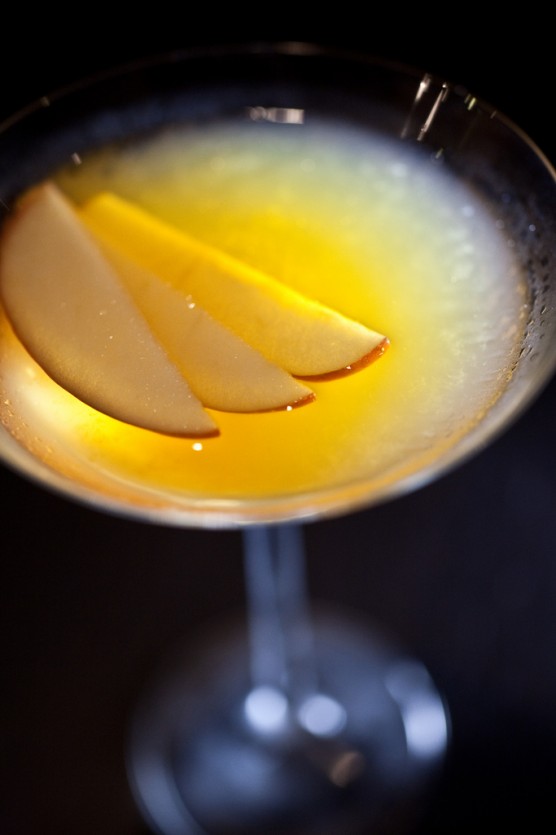
Applejack is basically apple brandy mixed with grain alcohol. It's one of my favorites, so here's a prohibition-era cocktail that's great for fall, for those of you over 21.

Applejack Rabbit

3 parts Applejack
1 part lemon juice
1 part orange juice
1 part maple syrup

Shake with ice and strain into cocktail glass.

My variation-- add a good dash of bitters and only 1/2 part maple syrup.

It goes really well with a nice sharp cheddar.

Book Provided by... my local library

Links to Amazon are an affiliate link. You can help support Biblio File by purchasing any item (not just the one linked to!) through these links. Read my full disclosure statement.

Tuesday, October 18, 2011

Shine vs. Chime

So by now most of us are aware of the giant clusterfuck that is this year's National Book Awards for Young People.

Apparently, when the judges call in their list of finalists, they do it over the phone, with titles only. So... the judges picked Chime but when they called it in, the person on the other end heard Shine. For a few hours, some lists had Chime, some had Shine and some listed both. Initially, NBA just had 6 finalists this year and said there was a mistake, but didn't mention the books involved (although because only 2 books sound alike, it was obvious.)

And then yesterday they pressured Lauren Myracle to withdraw her book, in order to protect the integrity of the award. Sorry, NBA, y'all destroyed that yourselves by staying so damn Klassy.

Ideally, they would have just said "there was some confusion this year because we chose 6 instead of 5 titles, which is why the reporting was initially weird." Then no one would have known that one of the books wasn't supposed to be there. How they originally handled it was weird, but not a huge deal.

Pressuring Lauren Myracle to remove her book? That's about as Klassy as a front porch couch covered in plastic and cigarette burns. At least she was able to talk them into giving $5000 to the Matthew Shephard Foundation.

I hadn't been planning on reading Shine. I like most of the Myracle books I've read, but this sounds like too much of a downer. But in that completely realistic way, which makes it even more of a downer. I don't think I can handle it. But, after Myracle's been screwed so royally in the past week, I went ahead and bought a copy. I can't give her a shiny finalist medal sticker for the book cover, but I can buy a copy and hope others buy a copy so it gets sales and she gets money (either through royalties or a bigger advance on her next book), because I think she could probably use a night out.


Links to Amazon are an affiliate link. You can help support Biblio File by purchasing any item (not just the one linked to!) through these links. Read my full disclosure statement.

Friday, October 14, 2011

Jefferson's Sons

Jefferson's Sons Kimberly Brubaker Bradley

Beverly is a child when his father gives him a violin. It's the first sign Beverly's had that his father cares. But Beverly's not allowed to tell anyone who is father is, he's not allowed to refer to him as "Papa," only "Master Jefferson." He doesn't understand why. He doesn't understand why Miss Martha will never admit she's his sister. He doesn't understand why he can't go see his father when he's in residence at the great house.

As adults, we understand because we know that Beverly is the oldest surviving child of Thomas Jefferson and Sally Hemmings. Jefferson has promised the Hemmings children their freedom when turn 21. Because 7 of their 8 great-grandparents are white, they're legally white, and Hemmings plans on her children to live as white people. The thought of leaving his mother and never seeing his family again doesn't agree with Beverly and he vows to stay, despite his mother's objections.

After a few years, the narrative shifts to Beverly's younger brother Maddy, who feels an even darker side to Jefferson when he sells Maddy's best friend, James. Maddy also knows he will never be light enough to live as a white person, like his siblings.

A few years further down the road and the narrative switches to James's younger brother Peter. Peter bears witness for the decline of Monticello, Jefferson's last days and the aftermath of his death.

I like the shifting focus. It stays in focused 3rd person, but the focus changes, which allows time to pass but the narrator to stay middle grade aged. Baker excellently captures a child's view of the world they live in (and for Beverly and Maddy, it is a protected and yet brutal world, due to their odd status.) The children and the narration and their comprehension grow and change, but before they'd get to old and shift to teen or adult, the narrator shifts to a younger character. The fact the characters are so close to each other means we already know Maddy and Peter when they take over the story, but we still see Beverly (an later Maddy) when the focus shifts away.

A large part of the initial heartbreak of this book is that, as an adult reader, we understand all the things that Beverly doesn't. Not to say that kids won't understand, as the answers are there soon enough, adults and older readers will just already know. The book carefully skirts the inherit power issues involved in the Jefferson/Hemmings relationship by making them truly love each other. I love how it showed the complexity of Jefferson. Maddy, especially, struggles with this.

More than that I loved the look of daily life on the Mulburry Row. The boys are all sons and training to be skilled labor-- they don't do field work and don't really know the slaves that do. They know "going to ground" as being an awful thing. It was an interesting look at the class differences amongst the slaves. I also really liked the way Baker paints the slow financial decline of Jefferson and Monticello-- the way the kids pick up on the tension in the great house and amongst their parents-- it's very well done.

Overall, it's just a plain fantastic book that doesn't skirt the issues but doesn't get bogged down the horror. There's also a fantastic author's note at the end discussing what's true and what isn't. I appreciate the fact that Baker says there is nothing in there that couldn't be true-- she actually rewrote sections when new discoveries were made.

This will be on everyone's Newbery lists this year.


Book Provided by... my local library

Links to Amazon are an affiliate link. You can help support Biblio File by purchasing any item (not just the one linked to!) through these links. Read my full disclosure statement.

Blame it on the Goose

Today at lunch I was reading the Cybils nominated Bootleg: Murder, Moonshine, and the Lawless Years of Prohibition when guess what came on my iPod random shuffle? Blame It (On The Alcohol).


Links to Amazon are an affiliate link. You can help support Biblio File by purchasing any item (not just the one linked to!) through these links. Read my full disclosure statement.
Wednesday, October 12, 2011

Murder on the Orient Express

Murder on the Orient Express: A Hercule Poirot Mystery Agatha Christie

In case you aren't familiar with the basic plot, Poirot is on a train from Istanbul to Paris when the train gets stopped in Yugoslavia by snow on the tracks. There's a murder and they don't want to bring in the Yugoslav police (commies!) until they've already solved it. Poirot quickly determines that most of the passengers are all connected with a crime that took place in the US many years ago (and not at all based on the Lindbergh baby).

I like the twist on the contained environment, but you don't get a sense of the claustrophobia that must have been there-- train cars stuck in snow with murder? There should have been more tension, but that's not Christie's style. What I find most ingenious about Christie's work isn't how her detectives solve the crimes but rather in ingenuity of her criminals. Poirot just kinda sits back and thinks through details only he's noticed. But the real genius of Christie is how intricate the murder plots are.

Book Provided by... my local library for my Kindle!

Links to Amazon are an affiliate link. You can help support Biblio File by purchasing any item (not just the one linked to!) through these links. Read my full disclosure statement.

Tuesday, October 11, 2011

The Specialists

Let it be stated for the record that I really liked this series and am totally bummed that it got discontinued.

Also, I read these books a few years ago, so short reviews based on what I remember.

The Winning Element Shannon Greenland

Beaker and GiGi are off to a cheerleading competition (oh the LOLS!) to track down a chemical smuggler who not only has a big deal that needs to be stopped, but is also killed GiGi's parents.

Overall, I liked the suspense and the mission and the humor of GiGi and Beaker as cheerleaders. One thing that annoyed me was TL. He gave GiGi control of the mission, but micro-managed and reversed every decision she made. She didn't want the responsibility, but he made her take it and then he took away all of her authority. He pretty much set her up to fail, but no one realizes this in the book. I wanted to smack him.

Native Tongue Shannon Greenland

So, a legendary vase turns up and several South American Indian tribes claim it as their cultural heritage. There's a big summit in the jungle to decide which tribe gets it. GiGi and Parrot are on the case-- Parrot as a translator and GiGi because there are some cave hieroglyphics that may say who gets the vase, but no one can read them, but with GiGi's code breaking abilities, she might be able to. Only problem is one of the guys is the bad guy from Parrot's past (is every book dealing with bad guys from the past? I'm remembering yes, but don't quote me on that one.)

IIRC, the Native content is handled really well. I also remember the tension.

And not all the lose ends of over-reaching plots were tied up. WE WANT MORE! GIVE US MORE!

Ah well.


Books Provided by... my wallet

Links to Amazon are an affiliate link. You can help support Biblio File by purchasing any item (not just the one linked to!) through these links. Read my full disclosure statement.

Monday, October 10, 2011

Thomas Jefferson for Kids


Thomas Jefferson for Kids: His Life and Times with 21 Activities Brandon Marie Miller

The basic concept for the For Kids.. with 21 activities series is it's a biography with crafts, projects, and activities interspersed that relate to the person or to the time period. In the past, my biggest complaint has been with the age range, especially of the activities-- some are for kids too old for the book, some for kids too young.

That is not a problem with Thomas Jefferson for Kids. The activities are all age-appropriate with the text, with what I feel is 4-7th grades. There's also a good range of activities-- a Jeffersonian model of the solar system (Neptune optional), dancing a reel (very well explained!), making a floor plan of your dream house, organizing your library, even making a microscope out of a matchbox. I think there's a good range of things for all interests while still being true to Jefferson and his late Colonial/early Republic time period.

I think the biography itself is also really well done-- Miller does an excellent job of highlighting and discussing the good and the bad and showing his inconsistencies and greatness of character. I think she treats the issue very sensitively and does a great job showing that he wasn't perfect, but doesn't demonize him and showing that he did amazing things without lionizing him.

I especially liked the way the book describes and explains the political issues of the new Republic. The book has a fantastic explanation of Federalism vs. Republicanism and the Jefferson/Adams split. It also shows how Washington was often caught in the middle of the two men.


It's a 2011 Cybils nominee and I have to say that it's overall very well done. I think the activities give it much more kid appeal than it would normally have. That said, it lacks that certain je ne sais quoi to move it from solidly well done to best of the best.

Today's nonfiction roundup is over at Practically Paradise.


Book Provided by... my local library

Links to Amazon are an affiliate link. You can help support Biblio File by purchasing any item (not just the one linked to!) through these links. Read my full disclosure statement.

Cybils! Cybils! Cybils!

It's Cybils time again!

Mosey on over here to nominate your top picks for the past year. You have until SATURDAY.

I'm on the nominating committee for Middle Grade/Young Adult Nonfiction again this year, after a year off last year. This is my favorite category because nonfiction is AWESOME and slightly insane. (Insane? YES-- all the drama and craziness of fiction, but IT'S REAL.)

My pile is not big enough. Please make it bigger!


(Those are some of the nominated Cybils books. It does NOT include ones I've already read, ones my libraries don't own, or ones where my hold hasn't come in yet. Most importantly, it doesn't include the book YOU WILL NOMINATE.)

This is a category that pretty much always has the shortest nomination list. That makes me sad. Help a sister out. My reading from now until December should be full of awesome truth that I've never heard before.

Links to Amazon are an affiliate link. You can help support Biblio File by purchasing any item (not just the one linked to!) through these links. Read my full disclosure statement.

Monday, October 03, 2011

Nonfiction Monday: Chasing Lincoln's Killer

Chasing Lincoln's Killer James L. Swanson

This book got so much good press when it came out and was even shortlisted for the YALSA Award for Excellence in Nonfiction and all I can ask is WHY?!

Ok, I know why. It's an exciting read-- Swanson can certainly tell a story. But, it's also deeply, deeply flawed.

The biggest flaw? NO SOURCE NOTES. No citations, no bibliography, just an assurance from the author that everything inside quotation marks is really true. Let me repeat that-- NO SOURCE NOTES. Now, this is a teen version of Swanson's adult title, Manhunt: The 12-Day Chase for Lincoln's Killer. Manhunt has an 18 page bibliography and 24 pages of endnotes. Chasing Lincoln's Killer has none.

Other minor issues-- simplification to the point of being wrong. Maybe it was only this one point, but this is the only one I'm super sure on-- the 11th Street Bridge does NOT lead from DC to Maryland. It's in the middle of DC. I drive across it multiple times a day to get to and from work. Yes, it closed at 9pm and Booth and Herold had to talk their way across the bridge long after it closed. Swanson makes a huge deal because this was the bridge out of DC, this was the only way to get to Maryland. And... no. Crossing the bridge led to Southeast DC and was the easiest and fastest way to get to Maryland, but they were still in DC once they got to the other side and there are ways to get to Maryland that don't involve crossing the Anacostia River. And it's not like the Maryland borders of DC have changed since the city was first created. Yes, for Booth and Herold to escape Washington, crossing the bridge was of vital importance, BUT Swanson over simplifies it so much that it ends up being plain wrong. Even better? The map at the back of the book shows the bridge as being in the middle of town.

There was also some potential fictionalization. Swanson talks about Booth's mood, the tension he felt, and this thought process. Maybe there are sources for this, but I wouldn't know BECAUSE THERE WERE NO SOURCE NOTES.

He has another book, Bloody Times: The Funeral of Abraham Lincoln and the Manhunt for Jefferson Davis, which was nominated for a Cybil this year. It's another teen edition of an adult book, Bloody Crimes: The Funeral of Abraham Lincoln and the Chase for Jefferson Davis. Let's see if it's any better. I'm not holding my breath though, because the library and book community so celebrated Chasing Lincoln's Killer.


Today's nonfiction round up is over at 100 Scope Notes.


Book Provided by... the publisher, for Cybils 2009 consideration

Links to Amazon are an affiliate link. You can help support Biblio File by purchasing any item (not just the one linked to!) through these links. Read my full disclosure statement.